
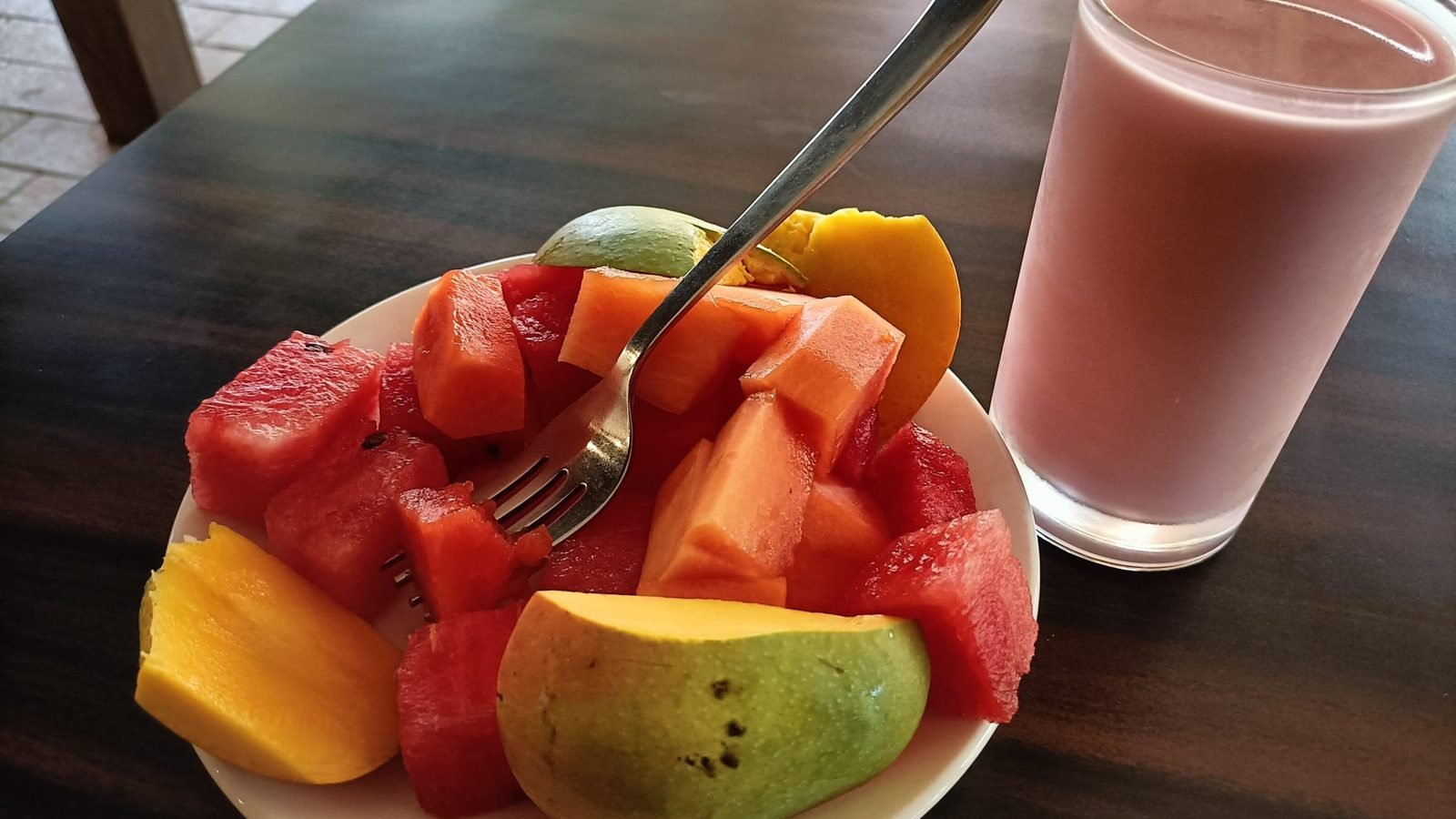
What fruits can dogs eat? Pineapple, strawberries, papaya, watermelon, apple, banana, mango and pear, always fresh, without peel, seeds or pits, in small pieces and as an occasional treat.
Grapes and raisins, never: they can cause kidney failure even in small amounts. All fruit counts toward the 10% of daily calories.
Sharing a piece of fruit with your dog is one of the most common things in any Colombian home, and most of the time there's nothing wrong with it. The problem is in the details: the mango pit, apple seeds, watermelon rind, or a fruit that seems harmless and isn't. This guide answers fruit by fruit, explains how to prepare them and how much to give, and wraps up with vegetables and other foods you can also share.
Quick chart: yes, with care, and no
Check it in ten seconds. The details for each food are below.
| Food | Can they eat it? | How to give it |
|---|---|---|
| Pineapple | Yes | Fresh, peeled, without the core. Never in syrup |
| Strawberries | Yes | Washed, without leaves, in pieces |
| Papaya | Yes | Ripe, without peel or seeds, in small amounts |
| Watermelon | Yes | Without seeds and without the hard rind |
| Apple | Yes | Without core or seeds, in pieces |
| Banana | Yes, in moderation | Peeled, a few slices: it has quite a bit of natural sugar |
| Mango | Yes | Without peel or pit, in small pieces |
| Pear | Yes | Without seeds or core, in pieces |
| Orange | With care | One or two peeled segments, without seeds |
| Avocado | Better not | Pit, skin and leaves are a risk |
| Grapes and raisins | Never | Risk of kidney failure |
| Carrot | Yes | Raw or cooked, washed, in pieces |
| Cucumber | Yes | In small slices |
| Sweet potato | Yes, cooked | Without skin. Never raw |
| Egg | Yes, cooked | Well cooked, without salt or oil |
| Onion and garlic | Never | In no form, not even in sauces or broths |
Fruits dogs can eat
All of the fruits in this section are safe when properly prepared and in small amounts. The rule that applies to all of them: remove hard peels, seeds, pits and cores, and cut bite-sized pieces for their mouth.
Can dogs eat pineapple?
Yes. According to the American Kennel Club, raw pineapple in small amounts is a good treat for dogs. Peel it completely, remove the core, which is hard and fibrous, and cut it into small pieces. A few pieces are enough. Canned pineapple or pineapple in syrup, no: the syrup concentrates too much sugar for their digestive system. Frozen in small chunks, it's a refreshing option for hot days.
Can dogs eat strawberries?
Yes, in moderation. Wash them well, remove the leaves and stem, and cut them to suit your dog's size: whole, a large strawberry can be too much for a small dog. Avoid anything with sugar, cream, chocolate or syrup, which turn a safe fruit into a problem.
Can dogs eat papaya?
Yes. PetMD considers it safe in small amounts, ripe and without peel or seeds, which are hard to digest and can upset their stomach. It's a very high-fiber fruit, so too much usually ends in digestive upset. Start with a couple of pieces.
Can dogs eat watermelon?
Yes. The watermelon is mostly water and many dogs love it. Remove all the seeds and the hard rind, because both can cause digestive upset. Serve it in small cubes and as an occasional treat, not every day.
Can dogs eat apple?
Yes, in pieces and in moderation. Remove the core and seeds before giving it to them. A whole apple is too much for most dogs because of its sugar content, as explained by the American Kennel Club: a few pieces are enough.
Can dogs eat banana?
Yes, but with more moderation than other fruits. The banana has quite a bit of natural sugar, and giving too much can add extra calories and cause digestive upset. Always peel it and offer a few thin slices, not a whole banana.
Can dogs eat mango?
Yes, properly prepared. Always remove the peel and the pit: the pit can get stuck and cause a blockage. Cut the flesh into small pieces even when it's soft, to prevent choking. The American Kennel Club recommends it as an occasional treat.
Can dogs eat pear?
Yes, in small pieces. Don't give them the seeds or the core: the seeds contain traces of toxic compounds and are also a choking hazard, according to the American Kennel Club. As with any fruit, a large amount can upset their stomach.
Can dogs eat orange?
Only in very small amounts: one or two peeled segments, depending on the dog's size. Orange isn't toxic, but its acidity and sugar can cause diarrhea in sensitive stomachs. The peel isn't recommended: it's tough, hard to digest and can cause a blockage.
Fruits dogs should not eat
Can dogs eat grapes?
No, never. Grapes and raisins can cause kidney failure in some dogs, even in small amounts. According to the American Kennel Club, it's still not known exactly which compound causes the toxicity, and that's why there's no amount considered safe. If your dog ate grapes, treat it as a veterinary emergency even if they don't have symptoms yet. Also watch out for breads, cookies and desserts that contain raisins.
Can dogs eat avocado?
Better not. The pit, skin and leaves contain persin, and the pit can also get stuck in the digestive tract. Here the sources don't fully agree: the American Kennel Club considers that a little flesh now and then is usually tolerated, while the ASPCA lists it among foods to avoid. Given that difference, the prudent thing is not to offer it. If your dog ate a piece of the flesh, it's usually not serious; if they swallowed the pit, call the vet.
A general rule for any fruit with a stone or large pit (mango, peach, plum, avocado): the flesh may be fine, the pit never. The full list of what they shouldn't eat is in foods dogs can't eat.
Vegetables dogs can eat
- Carrot. Raw or cooked, well washed and cut into pieces to prevent choking. The American Kennel Club considers it a safe, low-calorie snack.
- Cucumber. Safe, crunchy and very low in calories. In small slices and without overdoing the amount (AKC).
- Sweet potato. Always cooked and without skin. Raw, it's hard to chew, can upset their stomach and can cause a blockage (AKC).
Never give them onion, garlic, leeks or chives, in any form: they damage red blood cells, and the effect builds up. That includes stews, sauces and broths that contain them even if you can't see them.
Eggs, chicken and other foods
Can dogs eat eggs?
Yes, always well cooked and without salt, oil or seasonings. The American Kennel Club advises against raw egg white because it can contribute to a biotin deficiency. A chopped hard-boiled egg works as an occasional treat or supplement, not as the basis of their diet.
Chicken and rice
The chicken cooked, boneless, skinless, unsalted and unseasoned, is safe. Cooked chicken bones are not: they splinter. The rice white, cooked and unsalted, is also safe in small amounts.
Meat and organs
Meat and organs are the closest thing to what a dog naturally seeks out, and they're the basis of single-ingredient dehydrated treats, such as beef lung or the dehydrated beef. If you prepare them at home, make sure they're cooked and unseasoned.
If you're thinking about changing their overall diet and not just sharing a bite, start with our practical guide to natural dog food. A complete homemade diet needs to be balanced, and that's best designed with a vet.
How much fruit to give
Fruit is a treat, not a meal. The guideline from the WSAVA, also cited by the American Kennel Club, is that total treats for the day shouldn't exceed 10% of calories. The other 90% should come from their complete and balanced food.
In practice, that means a few bite-sized pieces, not a bowlful. The amount varies a lot between a 4-kilo dog and a 40-kilo one, and also with their activity and weight. If they're overweight, diabetic or have a digestive condition, ask your vet before adding fruit, especially the sweeter ones, like banana and mango.
And remember to add it all up: if they already got biscuits, a chew and pieces of fruit that day, it all counts toward the same 10%.
How to offer fruit safely
- Wash it well, as you would for yourself.
- Remove hard peels, seeds, pits and cores. That's where almost all the risk is.
- Cut it into small pieces, even soft fruits, to prevent choking.
- Always fresh and natural. Nothing canned, in syrup, with sugar, cream, sweetened yogurt or chocolate.
- One new fruit at a time. Start with one piece and wait a day before offering another, so you'll know which one disagreed with them if something happens.
- Stop if you see vomiting, diarrhea or itching, and see a vet if it doesn't go away.
If your dog ate something they shouldn't have, or you notice they lost their appetite after a change in what they eat, check out our guide on what to do if your dog won't eat.
Fruit or treat: what each one is for
Fruit and treats don't compete: they serve different purposes.
| Situation | Best option |
|---|---|
| Something cool on a hot day | Fruit: watermelon or pineapple in cubes, even frozen |
| Adding variety to their day | Fruit or vegetables, in a few pieces |
| Rewarding during training, many times in a row | Small, high-value treat: liver biscuits or beef lung, which break into pieces |
| Carrying treats in your pocket to the park | Dehydrated treat: fruit falls apart and stains |
| A long chewing and play session | Chew: rolled beef ear or trachea, always supervised |
If you'd rather make treats yourself, we have two homemade dog biscuit recipes with safe ingredients.
My Pet natural treats
Dehydrated treats with no rawhide, no preservatives or colorants, made in La Estrella, Antioquia, by an ICA-certified Colombian manufacturer.
- Beef Lung 60g — breaks with your fingers into tiny pieces
- Liver Biscuits 175gr — training treat
- Chicken & Carrot Biscuits 150gr — mild flavor

My Pet Team
The My Pet content team. My Pet is a Colombian maker of 100% natural dog treats and edible chews, produced in La Estrella, Antioquia, with certification from the Colombian Agricultural Institute (ICA).
This guide is for information only and doesn't replace a veterinary consultation. If your dog has a health condition, check with your vet before changing what they eat.
More about us on About us.
Frequently asked questions
Can dogs eat pineapple?
Yes, fresh pineapple, peeled, without the hard core and in small pieces. A few pieces are enough as a treat. Not pineapple in syrup or canned: the syrup has too much sugar for a dog.
Can dogs eat strawberries?
Yes, in moderation. Wash them well, remove the leaves and cut them into pieces suited to your dog's size. Never give them strawberries with sugar, cream, chocolate or in syrup.
Can dogs eat eggs?
Yes, always well cooked and without salt, oil or seasonings. The American Kennel Club advises against raw egg white because it can contribute to a biotin deficiency. A chopped hard-boiled egg works as an occasional treat or supplement, not as the basis of the diet.
Can dogs eat avocado?
It's not recommended. The pit, skin and leaves contain persin, and the pit can also get stuck in the intestine. The American Kennel Club considers a little flesh now and then tolerable, but the ASPCA lists it among foods to avoid. The prudent thing is not to offer it.
Can dogs eat grapes?
No, never. Grapes and raisins can cause kidney failure in some dogs, even in small amounts, and no safe amount is known. If your dog ate grapes, treat it as a veterinary emergency even if they don't have symptoms yet.
How much fruit can a dog eat per day?
Fruit counts as a treat. The WSAVA guideline is that total treats shouldn't exceed 10% of daily calories, so we're talking about a few bite-sized pieces, not a serving. Start with one, see how it agrees with them and adjust to your dog's size.
Summary
- They can eat: pineapple, strawberries, papaya, watermelon, apple, banana, mango, pear and, in very small amounts, orange.
- Never: grapes and raisins. Better not: avocado.
- The risk is in peels, seeds, pits and cores, and in anything with sugar or syrup.
- Safe vegetables: carrot, cucumber and cooked sweet potato. Onion and garlic, never.
- Eggs and chicken, always cooked and unseasoned.
- All fruit counts as a treat: a maximum of 10% of daily calories.
What's your dog's favorite fruit? Tell us in the comments.
References
- American Kennel Club — Human Foods Dogs Can and Can’t Eat — General guide to safe and unsafe human foods.
- American Kennel Club — Can Dogs Eat Pineapple? — Fresh vs. canned pineapple.
- American Kennel Club — Can Dogs Eat Watermelon? — Seeds, rind and the 10% rule.
- American Kennel Club — Grape Toxicity in Dogs — The kidney risk of grapes and raisins.
- American Kennel Club — Can Dogs Eat Avocado? — Persin in the pit, skin and leaves.
- American Kennel Club — Can Dogs Eat Eggs? — Cooked eggs and raw egg white.
- PetMD — Can Dogs Eat Papaya? — Preparation and amount.
- ASPCA — People Foods to Avoid Feeding Your Pets — Human foods to avoid.
- WSAVA — Global Nutrition Guidelines — The 10% rule for treats.



[…] Xylitol is the most dangerous mistake in home cooking. It shows up in "light" peanut butters, sugar-free applesauce and diabetic products you use without thinking twice. Read the label every time, even if it's your usual brand. The full list is in foods dogs can't eat, and the fruits and vegetables you can use are in what fruits dogs can eat. […]