
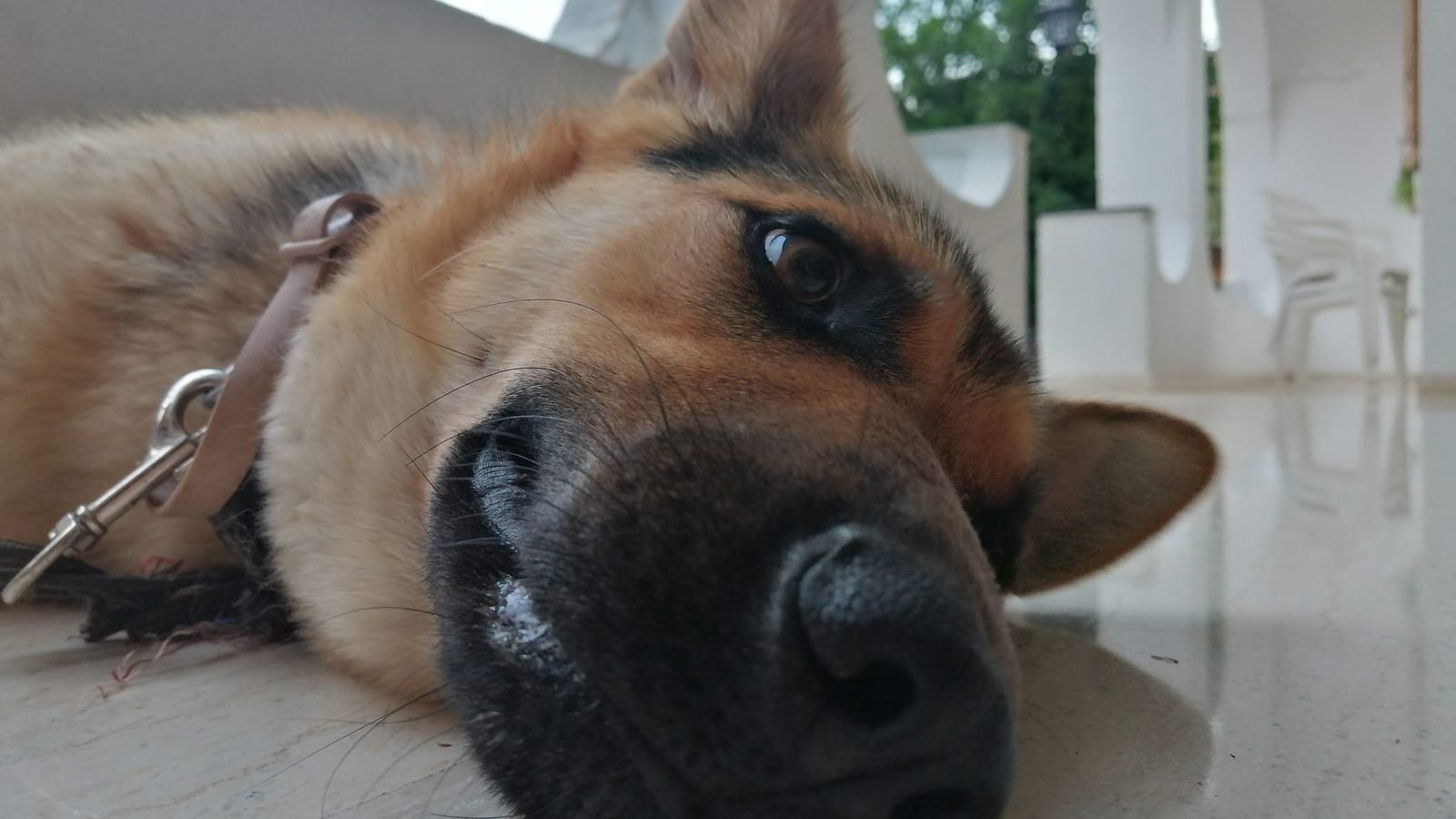
If you're thinking “my dog won't eat”, the first thing to do is check for other symptoms. With vomiting, diarrhea, lethargy or pain, call the vet now.
If they're lively and only refusing food, keep an eye on them: if they don't eat again within 12 to 24 hours, see the vet. In a small puppy, missing more than one meal already deserves attention.
A dog that leaves its bowl untouched is worrying, and with good reason. Sometimes it's temporary —a change of kibble, guests at home, an off day— and sometimes it's the first sign that something isn't right. This guide starts with what matters most, when not to wait, and then goes over the most common causes, what you can check at home and how to help a healthy dog get interested in their food again.
When to go to the vet right away
Loss of appetite isn't a diagnosis, it's a sign. VCA Animal Hospitals puts it this way: eating less or not eating at all is strongly associated with illness and should be taken seriously. That's why this section comes first.
Call the vet today if your dog won't eat and also:
- Is vomiting or has diarrhea.
- Is lethargic, hiding or doesn't want to get up.
- Has a swollen belly or is retching without bringing anything up, especially if it's a large breed.
- May have eaten something toxic or swallowed an object. Check the list of foods dogs can't eat.
- Recently started a new medication.
- Is a small puppy and has already missed more than one meal.
Without any of those signs, the American Kennel Club's guideline is to see the vet if they don't eat again within 12 to 24 hours.
With senior dogs or dogs with an already diagnosed illness, there's less leeway: when in doubt, call. A visit that ends in “it was nothing” always costs less than waiting too long.
Why a dog stops eating
The causes fall into a few groups. The table is meant to point you in the right direction, not to diagnose: several of them can only be confirmed by a vet.
| Cause | What it usually looks like | What to do |
|---|---|---|
| Illness | Refuses food along with other changes: is quieter, sleeps more, vomits | Vet |
| Mouth pain | Goes to the bowl, tries and drops it; chews on one side | Vet |
| Medications | Loss of appetite coincides with a new treatment | Tell the vet who prescribed it |
| Stress or changes at home | A move, a trip, guests, a new baby or a new pet | Watch, keep the routine; see the vet if it lasts beyond 12–24 h |
| Food change | Refuses the new bag and accepts the old one | Gradual transition |
| Personal habits | Eats at a different time or only when the family is home | Usually normal if they eat well afterward |
| Too many treats or table food | Leaves the bowl but keeps begging for and accepting goodies | Cut back on extras and set mealtimes |
The first five are described by the American Kennel Club as the most common reasons. The last one isn't medical, but it comes up at the vet more often than people think.
Won't eat or can't eat?
There's one distinction that really helps you understand what's going on. VCA separates two situations that look alike from the outside:
- True loss of appetite. The dog has no interest: doesn't go to the bowl, turns their head away, ignores even what they love.
- Wants to, but can't. They're hungry, they go to the bowl, try and give up. This is usually due to pain or difficulty picking up, chewing or swallowing food: inflamed gums, a damaged tooth, jaw pain or pain somewhere else in the body that keeps them from bending down to the bowl.
Watch them closely as they try to eat. If you see them approach eagerly and back off, drool, drop food or chew on only one side, it's a case for the vet, not for switching kibble.
What to check at home
If your dog is lively, drinking water and has none of the symptoms listed above, go through these questions before changing anything:
- Did anything change in their food? Brand, flavor, a new bag, or kibble that has been open a long time.
- How many extras did they get today? Add up treats, table scraps and anything other people in the house gave them.
- Were there changes at home? Trips, guests, construction, a different schedule.
- Do they eat when you're around? Some dogs only eat calmly when they have company.
- Is the food in good condition? A rancid smell, dampness or clumps are reason enough to refuse it.
- Did they take any new medication? If so, let your vet know.
Write down what you find. If you do end up at the vet, it's exactly the information they'll ask for.
How to stimulate their appetite
These ideas are for a healthy dog that's being picky or having an off day. They don't replace a vet visit if there are symptoms. Several are recommended by the American Kennel Club itself:
- Warm the food slightly. Warmth releases aroma, and smell is what sparks a dog's interest.
- Warm water over dry kibble. It softens it and makes it more appetizing.
- A little dog-safe broth: no salt, no onion, no garlic, no seasoning. Bouillon cubes won't do.
- Hand-feed them if they respond well to the attention.
- Set mealtimes. Offer their portion at the same time and, if they don't touch it after a while, take it away until the next meal. Leaving the bowl out all day makes food lose its moment.
- If you're going to switch foods, do it gradually, mixing the new with the old over several days.
A trick many owners of picky dogs use: crumble a little of a strong-smelling treat over their food, such as beef lung or liver biscuits. It works as an occasional boost for a healthy dog, not as a replacement for their meal, and never to mask a symptom: if they only eat when you put something on top for several days, that's also worth a vet visit.
Refuses kibble but takes treats
This is the most common version of “my dog won't eat,” and it almost always has a behavioral explanation. A healthy dog quickly learns that leaving the bowl makes something tastier appear. If every time they refuse their kibble they get chicken, bread or a goodie, refusing works for them.
The way out is to break that cycle:
- Treats and extras between meals and in controlled amounts. The guideline from the WSAVA is that they shouldn't exceed 10% of daily calories.
- Don't replace their food with treats, however natural they are. A treat isn't a complete diet.
- Offer their portion, wait a while and take it away. No punishment and no offering alternatives.
A simple test to tell whether it's preference or loss of appetite: offer them something they love. If they take it eagerly, the problem is the bowl. If they refuse that too, it's no longer pickiness, and it's best to see the vet.
What not to do
- Don't force them to eat or put food in their mouth.
- Don't give them human medications for the stomach or appetite. Several are dangerous for dogs.
- Don't switch kibble every day. It teaches them to hold out for something better.
- Don't reward the hunger strike with table food. Besides reinforcing the refusal, many dishes contain onion, garlic or too much fat.
- Don't wait several days “to see if it passes” once 12 to 24 hours have gone by.
My Pet natural treats for picky dogs
Strong-smelling dehydrated treats, no rawhide, no preservatives or colorants, made in La Estrella, Antioquia.
- Beef Lung 60g — crumbles with your fingers, ideal for sprinkling
- Liver Biscuits 175gr — break into small bites
- Beef Jerky 100gr — dehydrated beef
If you're reviewing what your dog eats besides their kibble, you may also find our guide useful on which fruits and foods dogs can eat.

My Pet Team
The My Pet content team. My Pet is a Colombian maker of 100% natural dog treats and edible chews, produced in La Estrella, Antioquia, with certification from the Colombian Agricultural Institute (ICA).
This guide is for information only and does not replace a vet visit. If your dog won't eat and has any other symptom, call your vet.
More about us on About us.
Frequently asked questions
How long can a dog go without eating?
It's best not to put it to the test. If your dog is lively and has no other symptoms, the American Kennel Club's guideline is to see the vet if they don't eat again within 12 to 24 hours. If there's vomiting, diarrhea or lethargy, don't wait. And for a small puppy, missing more than one meal is already reason to take them in.
Why won't my dog eat but still drinks water?
Still drinking is a good sign, but it doesn't rule out a problem. It could be stress, a change of food or a passing discomfort, and it could also be the start of an illness. Watch for any other symptoms and apply the same rule: if they don't eat again within 12 to 24 hours, see the vet.
Why won't my dog eat kibble but will eat treats?
If they're healthy, the most likely reason is that they've learned refusing the bowl brings something tastier. Cut back on treats and table food, offer their portion at set times and don't replace it with treats. If they also refuse what they normally love, it's no longer preference: it's loss of appetite and it's best to see the vet.
Is it normal for my dog not to eat when I'm not home?
It can be. For many dogs, mealtime is social and they eat more calmly when their family is around. If they eat normally once you're back, it's usually not a health problem. If they also cry, destroy things or get distressed when you leave, it may be separation anxiety.
Can I give them broth to get them to eat?
Yes, as long as it's dog-safe: no salt, no onion, no garlic and no seasoning. Bouillon cubes and homemade broths made for people almost always contain one of those ingredients. A little warm water over dry kibble also helps it smell stronger and become more appetizing.
If what you're seeing is distress when you leave home, we cover it in depth in separation anxiety in dogs.
Summary
- With vomiting, diarrhea, lethargy or pain, see the vet now. There's nothing to try at home first.
- With no other symptoms, the guideline is 12 to 24 hours. For small puppies, more than one missed meal.
- Tell “won't” from “can't.” If they try and drop it, there's usually pain.
- For a healthy, picky dog, set mealtimes, warm food and fewer extras.
- Treats don't replace food and shouldn't exceed 10% of daily calories.
What worked for yours when they lost their appetite? Tell us in the comments.
References
- American Kennel Club — Why Is My Dog Not Eating? — Common causes, tips to stimulate appetite and when to call the vet.
- VCA Animal Hospitals — Anorexia in Dogs — The difference between true loss of appetite and inability to eat, and its link to illness.
- WSAVA — Global Nutrition Guidelines — Veterinary nutrition guidelines and the 10% rule for treats.

[…] Chews on one side, drops food or stops eating. We explain it in my dog won't eat. […]