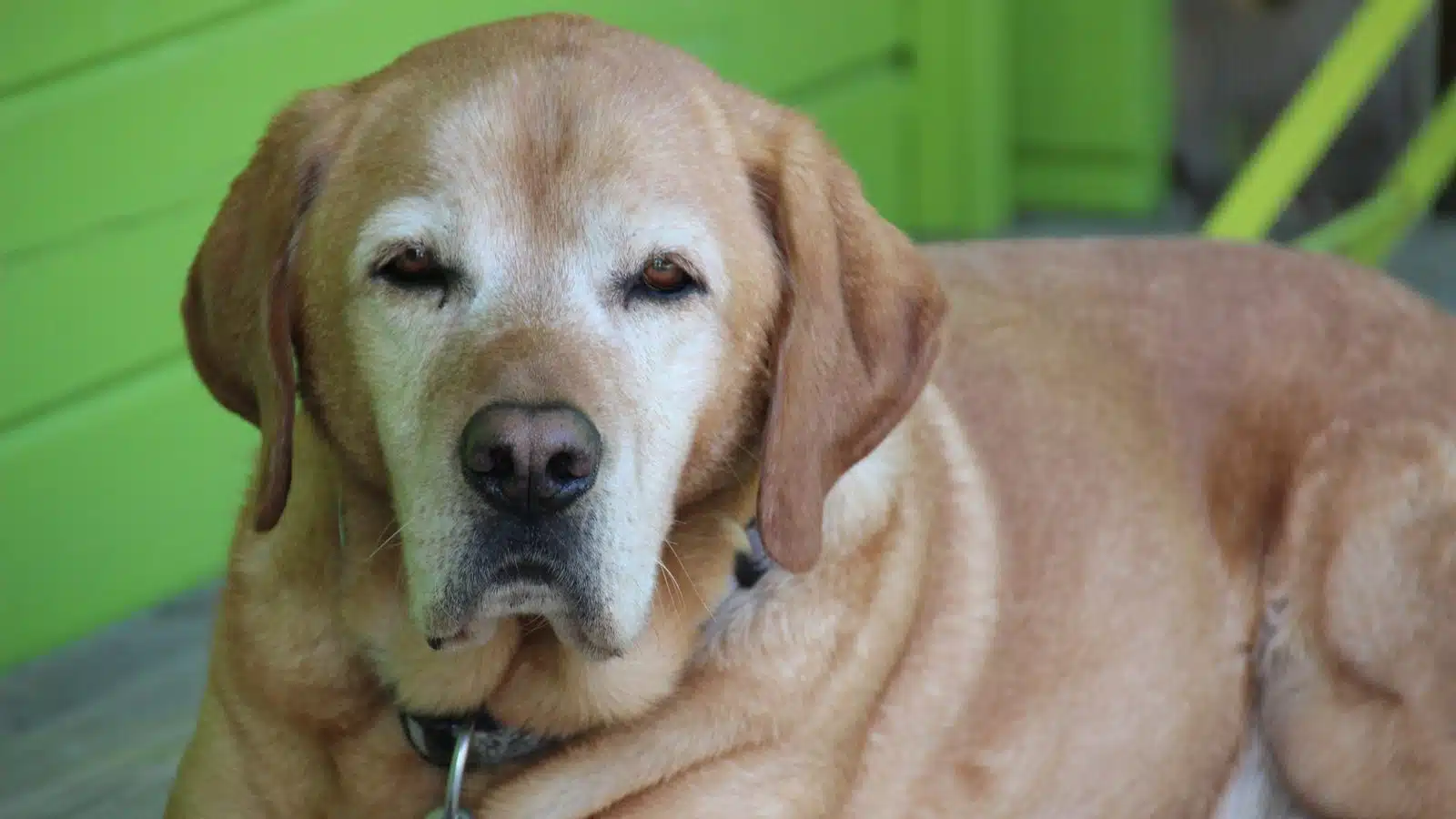
An older dog needs treats suited to their mouth and their pace: textures that give when bitten, small parts and measured portions, because they usually burn less energy and gain weight easily.
If their teeth are worn down or missing, avoid very hard chews like bones and antlers, and ask your vet to check their mouth. Once they reach their senior years, it's best to take them for a checkup once or twice a year.
One day you notice your dog's muzzle has gone gray, they nap more and they no longer take the stairs with the same bounce. Aging isn't a disease, but it does change what your dog needs: how they eat, how they chew, how much they move and which treats suit them. In this guide we explain at what age a dog is considered senior based on size, which signs to watch for and how to choose treats they can enjoy safely.
At what age is a dog old?
There's no single birthday. The American Kennel Club explains that many vets consider a dog senior once it reaches the last quarter of its life expectancy. Since large dogs live shorter lives than small ones, they also age sooner: a 9-year-old Great Dane is much “older” than a Chihuahua of the same age.
| Size | Examples | Approximate senior stage |
|---|---|---|
| Small | Chihuahua, Yorkshire Terrier, Shih Tzu, Poodle | Between 8 and 12 years |
| Medium and large | Labrador (lives 11 to 13 years on average) | Around 8 or 9 years |
| Giant | Great Dane, Mastiff | From 6 or 7 years |
These are approximate AKC ranges: each dog's genetics and health also play a part.
What changes in a senior dog
Changes come slowly and, since you see your dog every day, they're easy to miss. The AKC even recommends asking a relative or friend to look at your dog now and then, because they may notice what you no longer see. These are the most common signs:
| Area | What you may notice | What it means for their treats |
|---|---|---|
| Mobility | Stiffness, trouble getting up, climbing stairs or jumping into the car | Every extra kilo weighs on their joints: treats count |
| Energy | Sleeps more and gets less excited about walks | Burns less energy, so needs less extra food |
| Weight | Gains weight from moving less, or loses it from losing muscle or appetite | Weigh them often and adjust portions |
| Mouth | Bad breath, eats more slowly, chews on one side only | Textures that give and small pieces |
| Senses and mind | Sees or hears less, gets confused, sleep routine changes | Treats for gentle sniffing and training games |
The AKC notes that if your dog loses more than 10 % of their body weight over several months or a year, you should take them to the vet.
Teeth: the key to choosing treats
Over the years, teeth wear down, gum disease appears and some teeth loosen or fall out. Persistent bad breath can be a sign of gum disease or infection, according to the AKC. That completely changes which treats are right for them.
Very hard chews can fracture teeth. The Merck Veterinary Manual lists real bones, hooves, antlers and hard nylon toys among the objects that can fracture a dog's teeth. A fractured tooth should be checked by a vet, because if the damage reaches the pulp, a root canal or extraction is needed.
The AKC sums it up very clearly: the hard chews your dog enjoyed when young will probably be too hard once they're a senior with dental problems. Watch for these signs of mouth pain, also described by Merck:
- Won't let you touch their mouth or a particular tooth.
- A tooth changes color: reddish, purple or grayish.
- You see a fracture or a red or dark spot on the crown.
- Their face swells.
- Eats less or drops food.
If you notice any of these, get a checkup before giving any chew. And if the issue is their breath, you may find our guide helpful on bad breath and tartar in dogs.
Which treats to give an older dog
The rule is to choose based on your dog's mouth, not on what they liked five years ago. The AKC recommends picking each chew based on the dog's age, chewing style and personality, and making sure it isn't small enough to fit whole in their mouth.
| If your dog… | Try | Why |
|---|---|---|
| Has good teeth but less strength | Trachea 6″ | The AKC describes it as a softer chew; offer it in the right size and under supervision |
| Has worn-down or missing teeth | Beef Lung 60g or Trachea Rings x6 | Lung breaks apart by hand into small pieces; the rings are short pieces |
| Enjoys sniffing and training games | Liver Biscuits 175gr | They break into tiny bites to hide or reward |
| Has trouble chewing | Chicken & Carrot Biscuits 500gr softened | You can leave a biscuit in warm water for a few minutes to soften it |
| Has fractured or loose teeth, or pain | Nothing hard until the vet checks them | Diagnosis first, treats second |
What about bones? Our Beef Bone or the Half Beef Femur are for dogs with healthy, strong teeth, always under supervision. For an older dog with a sensitive mouth, the sensible choice is to skip them. We compare textures in beef bones vs. pork bones, and everything about trachea in beef trachea for dogs.
Another idea for an older dog is to use treats as mental stimulation. The AKC recommends gentle activities with sniffing and puzzle toys: a few biscuit pieces hidden around or inside a stuffable toy make a great plan. We explain how in how to fill a Kong with natural treats.
Portions: less energy, fewer treats
According to the AKC, the two main feeding issues for a senior dog are excess weight and poor appetite. Many older dogs do fine on their adult food; what changes is how much energy they burn. A vet quoted by the AKC puts it this way: keeping them lean is the best help for them to move better.
- Smaller pieces. An older dog enjoys a little piece just as much as a whole one.
- Count treats as part of their daily ration. If they get more treats one day, cut back their food a little.
- As a general guideline, treats should make up only a small part of what they eat each day. Your vet can give you the number for your dog.
- Weigh them often, at home or at the vet.
If your dog is already carrying a few extra kilos, check out our guide my dog is overweight: how many treats to give. And to choose the size of each treat, see which treat to give your dog based on size.
Checkups and signs it's time for the vet
At the AKC, an internal medicine specialist recommends taking senior dogs for a checkup once or twice a year, to catch problems before they become serious. At those visits the vet can check mobility, weight, vision, dental health, blood work and behavior changes.
Don't wait for the checkup if you notice any of these signs: unexplained weight loss, stops eating, mouth pain, drinks or urinates much more than before, new lumps appear, or seems confused or disoriented. Some things that look like “just age” are treatable conditions.
If your concern is that your dog is eating less and less, also see what to do if your dog won't eat.
My Pet natural treats for older dogs
Single-ingredient dehydrated treats and dog biscuits, with no preservatives or colorants. Made in La Estrella, Antioquia, by an ICA-certified Colombian manufacturer.
- Textures that give: Trachea 6″, Trachea Tubes 250g
- To break into small pieces: Beef Lung 60g, Liver Biscuits 175gr
My Pet Team
The My Pet content team. My Pet is a Colombian maker of 100% natural dog treats and edible chews, produced in La Estrella, Antioquia, with certification from the Colombian Agricultural Institute (ICA).
This guide is for information only and does not replace a visit to the vet. If your older dog is in pain, losing weight or not eating, see your veterinarian. More about us on About us.
Frequently asked questions
At what age is a dog considered old?
It depends on their size. Many vets consider a dog to enter its senior stage once it reaches the last quarter of its life expectancy. According to the American Kennel Club, small breeds usually get there between 8 and 12 years, a Labrador around 8 or 9, and giant breeds from 6 or 7.
Can I give my older dog bones?
Very carefully. Very hard chews can fracture teeth, and the Merck Veterinary Manual lists real bones, hooves and antlers among the objects that cause fractures. If your dog has worn, loose or missing teeth, it's better to choose textures that give and ask your vet to check their mouth.
Which treats are best for an older dog?
The ones that suit their mouth: textures that give when bitten, pieces that can be broken into small bits and treats with few ingredients. Trachea is a softer chew than a bone, dehydrated lung breaks apart by hand, and biscuits can be broken up or softened with a little warm water.
How many treats can a senior dog eat?
Few and small. Many older dogs burn less energy and gain weight easily, and keeping them lean helps them move better. As a general guideline, treats should make up only a small part of what they eat each day; your vet can give you a number for your dog.
My older dog is eating less. Is that normal?
It can be part of aging, since they burn less energy, but it can also be a sign of mouth pain or illness. If they keep eating less, lose weight or stop eating altogether, take them to the vet.
Summary
- A dog is senior in the last quarter of its life: giant breeds first, small breeds last.
- Their mouth decides: textures that give and small pieces; nothing very hard if their teeth are sensitive.
- Less energy, fewer treats: small, counted pieces within their daily ration.
- Checkups once or twice a year, and sooner if they lose weight, stop eating or are in pain.
How old is your dog, and what's their favorite treat? Tell us in the comments.
References
- American Kennel Club — How Do You Know When Your Dog Is a Senior? — Senior stage by life expectancy and size, signs of aging and checkups once or twice a year.
- American Kennel Club — Signs of Aging in Dogs — Bad breath, weight changes (more than 10 %) and behavior changes.
- American Kennel Club — How to Choose Edible Dog Chews That Are Also Safe — Hardness, size and chews for senior dogs; trachea as a softer chew.
- American Kennel Club — How to Improve Your Senior Dog’s Quality of Life — Excess weight and poor appetite in older dogs.
- Merck Veterinary Manual — Dental Disorders of Dogs — Causes and signs of fractured teeth and their treatment.