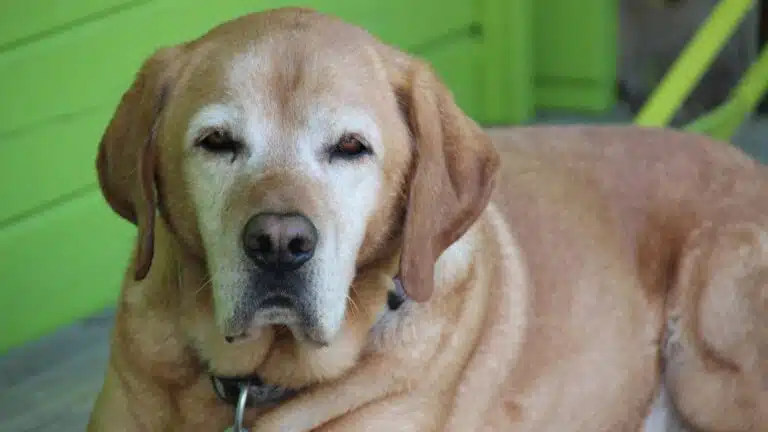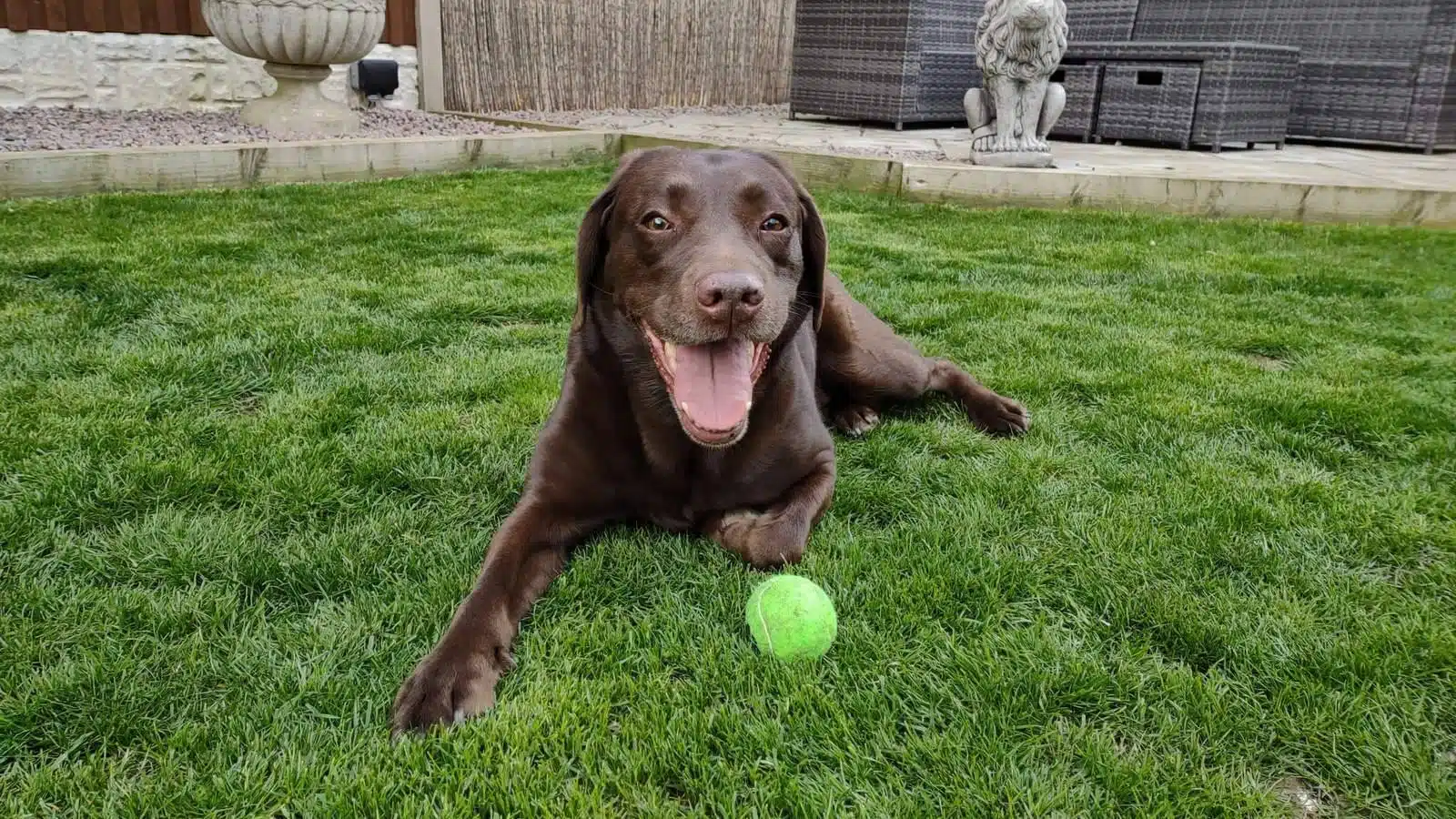
A fat dog is one with no visible waist from above, no tucked-up belly from the side, and ribs that are hard to feel. According to VCA Animal Hospitals, a dog is overweight if it weighs 10% to 20% more than its ideal weight, and obese above 20%.
Treats don't have to disappear: the veterinary recommendation is that they stay under 10% of daily calories. Before changing their food, talk to your vet: they'll set the target weight and the portion.
We see so many overweight dogs that a “chubby” dog now seems normal to us. But extra pounds shorten their life and raise the risk of several diseases. This guide shows you how to check your dog at home, what to do with your vet, and how many treats they can keep getting.
How to tell if your dog is fat
The scale isn't enough: a muscular dog can weigh a lot and be in shape. That's why weight is combined with body condition, which is assessed by looking and touching. According to VCA Animal Hospitals, here's how to do it:
1. Look from above
With your dog standing, look down at them. You should see a waist that tucks in behind the ribs, like a soft hourglass. If the body is straight from shoulders to hips, or widens, there's extra fat.
2. Look from the side
Crouch down to their level. The belly should tuck up between the ribs and the hind legs. If it hangs down or runs in a straight line, that's another sign of being overweight.
3. Feel the ribs: the hand test
Place your thumbs on the spine and spread your fingers over the ribs, just behind the front legs. Then compare what you feel with your own hand:
| If the ribs feel like… | Your dog is probably… |
|---|---|
| Your knuckles with a closed fist: prominent, no fat | Too thin |
| Your knuckles with your hand flat on a table, or the back of your hand | At their ideal weight |
| The fleshy part of your palm | Overweight |
You can use the same test to track their progress between vet visits. If your dog has arthritis, touch the hips and spine gently.
The body condition scale
Vets use a scale from 1 to 9 (some use a 1-to-5 scale). On the 9-point scale published by the World Small Animal Veterinary Association (WSAVA), ideal is 4 or 5:
| Score | What you see and feel | Condition |
|---|---|---|
| 1 to 3 | Ribs, spine and hip bones visible; little or no fat to the touch; very pronounced waist | Below ideal |
| 4 to 5 | Ribs easy to feel under a thin layer of fat; waist visible from above; belly tucked up from the side | Ideal |
| 6 | Ribs can be felt, but with some extra fat; waist visible but not very defined | Above ideal |
| 7 | Ribs hard to feel under a thick layer of fat; fat deposits over the lower back and base of the tail; waist almost absent | Overweight |
| 8 to 9 | Ribs only felt with firm pressure or not at all; no waist; bulging belly; fat on the neck and legs | Obesity |
VCA notes that a score of 7 out of 9 equals about 30% body fat. From 6 up, a vet visit is worth it.
Why being overweight matters
According to VCA Animal Hospitals, even moderate excess weight can shorten life expectancy by almost two years, because fat produces inflammatory substances. Overweight dogs are at higher risk of:
- Osteoarthritis and faster joint wear
- Diabetes
- Heart disease and high blood pressure
- Bladder stones
- Some types of cancer
- Complications with anesthesia
Excess weight can also be a sign of another condition, such as hypothyroidism or Cushing's syndrome.
First, the vet
Don't cut their food “by eye.” VCA explains that simply reducing the amount of their usual food can, over time, leave them short on vitamins and minerals. The plan is put together by the vet: target weight, daily calories, type of food and portion.
At the appointment, the vet can:
- Rule out diseases that cause weight gain.
- Calculate the ideal weight and the daily calories your dog needs.
- Recommend a food formulated for safe weight loss, if needed.
- Schedule monthly weigh-ins, to make sure the weight comes off neither too fast nor too slow.
For a homemade diet, VCA recommends having it formulated by a vet who specializes in nutrition. Our natural feeding guide helps you prepare for that conversation.
How many treats to give: the 10% rule
Here's the answer many people are looking for. VCA sums it up in one line: treats or snacks shouldn't exceed 10% of daily calories for your dog. Their example:
| Daily calorie target | From their food | From treats (maximum) |
|---|---|---|
| 1,000 kcal | 900 kcal | 100 kcal |
Your dog's number depends on their size, age, activity and health, so ask your vet for it. With that number:
- Break each treat into small pieces. For training or reinforcing a behavior, what matters is rewarding at the right moment, not the size of the treat. The same treat broken into eight goes eight times as far.
- Set up the “daily bag.” In the morning, set aside the day's treats and make that the only source for the whole family. When it's gone, it's gone.
- Treats get subtracted, not added. If you give more treats one day, for example while training, adjust their portion a little as your vet advises.
| If today you do this… | Switch to… |
|---|---|
| Giving a whole treat every time they listen | The same treat broken into lentil-sized pieces |
| Everyone in the house giving them “a little something” | A single daily bag for everyone |
| Giving them bits of what you're eating | Nothing from the table; a piece of their own treat if you want to include them |
More about treats in dog training with treats and which treat to give based on their size.
Portions, routine and exercise
Measure the portion
The American Kennel Club reminds us that package guidelines are a suggestion and can give larger portions than needed. Older dogs usually need fewer calories; puppies and very active dogs, more. Measure with a measuring cup or kitchen scale, never “by eye.”
Set mealtimes
Eating at set times, instead of leaving the bowl full, lets you know how much they eat. In how many times a day a dog should eat we explain how to organize it based on their age.
More movement, little by little
An overweight dog tires more easily and their joints suffer more: increase activity gradually and ask your vet what's safe. VCA even recommends a physical rehabilitation assessment as part of the plan. Ideas:
- Longer walks at a relaxed pace, instead of short runs.
- Sniffing games: hiding pieces of treats around the house gets them moving and thinking.
- Fillable toys so they “work” for their food, as we explain in how to fill a Kong with natural treats.
Mistakes that add calories without you noticing
- Table scraps. Chicken skin, fat from the barbecue, arepa with butter: they add up fast and some are dangerous; check can dogs eat chocolate?.
- Several “treat-givers” in the house. Everyone gives a little and by the end of the day it's a lot.
- Sudden diet changes. If the vet recommends a new food, transition over several days: abrupt changes can cause diarrhea. If it happens, see what to do if your dog has diarrhea.
Treats that break into small pieces
Single-ingredient dehydrated treats, with no preservatives or colorants, made in La Estrella, Antioquia, by an ICA-certified Colombian manufacturer. They break apart by hand, so one pack makes lots of small treats within the daily 10%.
- Beef Lung 60g — crumbles into very small pieces
- Liver Biscuits 175gr — breaks into several bites
- Beef Jerky 100gr — strips you can cut into bits for training
My Pet Team
The My Pet content team. My Pet is a Colombian maker of 100% natural dog treats and edible chews, produced in La Estrella, Antioquia, with certification from the Colombian Agricultural Institute (ICA).
This guide is for information only and doesn't replace a visit to the vet. Before changing your dog's diet or starting a weight-loss plan, talk to your vet. More about us on About us.
Frequently asked questions
How do I know if my dog is fat?
Look from above: you should see a waist behind the ribs. Look from the side: the belly should tuck up between the ribs and the hind legs. And feel the ribs: you should be able to feel them easily under a thin layer of fat, like running your fingers over the back of your hand. If you have to press to find them, your dog is probably overweight.
How many treats can I give my dog a day?
Treats shouldn't make up more than 10% of the calories your dog needs each day. If their target is 1,000 calories, 900 come from their food and 100 from treats. Ask your vet for your dog's number and, from there, split that 10% into small pieces throughout the day.
Is it enough to just feed an overweight dog less?
It's not recommended. Cutting back on their usual food can leave them short on vitamins and minerals over time. The right approach is for your vet to set the target weight, calories, type of food and portion size, and for you to weigh your dog regularly to check they're losing weight at the right pace.
When is a dog considered obese?
According to VCA Animal Hospitals, a dog is overweight when it weighs 10% to 20% more than its ideal weight, and is considered obese when it exceeds its ideal weight by more than 20%. On the 9-point body condition scale, ideal is 4 or 5; 6 and above means excess fat.
Do I have to stop giving my dog treats if they're overweight?
Not necessarily. Treats can still be part of their day if they count toward their total calories and stay under 10%. Break each treat into small pieces, keep a single daily bag for the whole family and avoid table scraps, which tend to add up the most without anyone counting them.
Summary
- An overweight dog has no waist, no tucked-up belly, and their ribs are hard to feel.
- Overweight: 10–20% above ideal weight. Obese: more than 20%.
- Vet first: rule out illness and set target weight, calories and portion size.
- Treats: no more than 10% of daily calories, broken into small pieces and from a single bag.
- Measure portions, set mealtimes and increase activity little by little.
What has worked for you? Tell us in the comments.
References
- VCA Animal Hospitals — Obesity in Dogs — Definition of overweight and obesity, risks, the hand test, why just cutting food isn't enough, the 10% rule for treats and monthly weigh-ins.
- VCA Animal Hospitals — Body Condition Scoring in Dogs — How to assess body condition by looking and feeling, and the 5- and 9-point scales.
- WSAVA — Body Condition Score (dog) — 9-point body condition scale.
- American Kennel Club — How Much Should I Feed My Dog? — Factors that determine portion size and using package guidelines as a suggestion.