
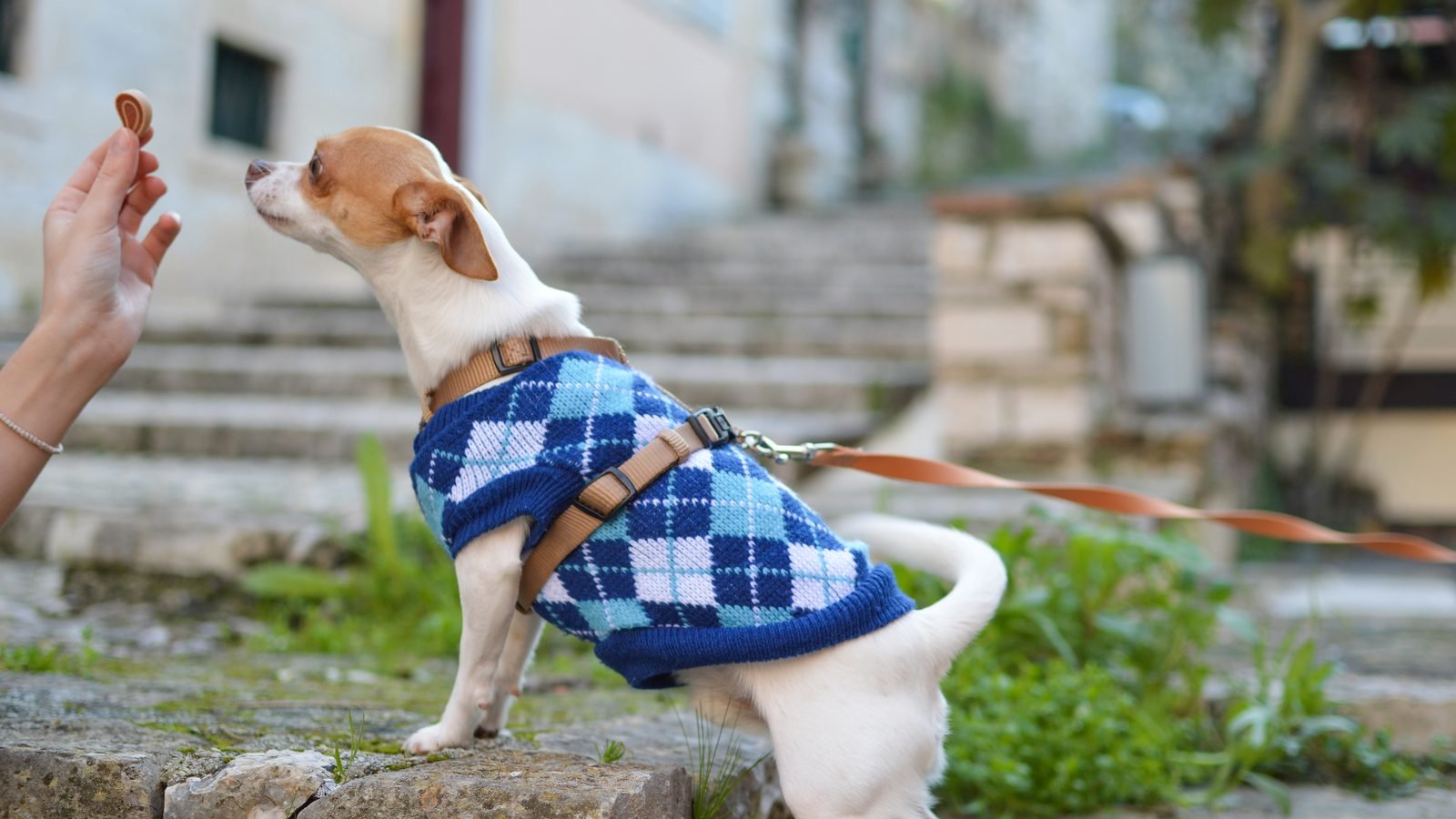
In dog training with treats, size matters as much as timing. Since you give many per session, each treat should be tiny, the size of a pea or smaller.
And it should arrive right away, the moment the dog does the right thing, so they understand what's being rewarded. If it takes several seconds, you may end up rewarding something else.
Almost every training guide talks about commands. Very few talk about the treat, which is the tool that makes the method work. As treat makers, we see the same mistakes every day: pieces that are too big, delivered too late, in amounts the dog doesn't need. This guide focuses on that: how to use the treat well. It doesn't replace a trainer, but it'll save you a good deal of the frustration of starting on your own.
Why the treat works
A dog repeats whatever brings them something good. That's the whole basis of positive reinforcement: marking the right behavior and rewarding it instead of punishing the mistake. The American Veterinary Society of Animal Behavior (AVSAB) puts it plainly: the evidence supports reward-based methods for all dog training, and there's no evidence that aversive methods are necessary.
Food is the most practical reward because nearly every dog wants it, it can be delivered in a second, and it's easy to portion. But it's not the only one: play, praise or a walk are rewards too. Good training combines them.
How big a training treat should be
This is the point almost nobody explains and the one people get wrong most often. In a session you'll reward many times, so each treat has to be small. The American Kennel Club gives the measure: for a large dog, a pea-sized piece is enough; for a small one, even less.
A small treat has three advantages:
- It's eaten in a second, so you can move on to the next repetition without losing your rhythm.
- It doesn't fill them up, so they stay motivated until the end of the session.
- It adds fewer calories, which lets you reward more often without throwing off their diet.
That's why small biscuits and dehydrated treats you can break with your fingers are the natural training format. A biscuit can be split into two or three pieces; a ranchero or a piece of lung, into many more. If your dog is small, check out our guide on which treat to give your dog based on size.
Delivery timing: why seconds matter
The dog links the treat to whatever they're doing at the moment they receive it. If they sat, stood up, and then got the biscuit, they may think the reward was for standing up. The AKC sums it up: if you're slow to deliver the treat, your dog may get confused about what's being rewarded, so give it as quickly as possible after the behavior.
The trick to not depending on your speed is a marker: a short word like "good!" or "yes!", or a clicker, that sounds exactly when the dog gets it right. The marker says "that, exactly that," and the treat comes a moment later. For it to work, every marker has to be followed by a treat, always.
Three habits that help:
- Treats ready before you start, already broken up, in a treat pouch or pocket.
- One free hand, so you're not digging in the bag mid-exercise.
- The same marker word for the whole family.
Which treat to use for each situation
Not all treats are worth the same to your dog. The AKC suggests a simple idea: in your living room, without distractions, a simple treat may be enough; somewhere with lots of distractions, you need the treat your dog loves most. A practical chart:
| Situation | Treat value | Recommended format |
|---|---|---|
| Reviewing something they already know, at home | Low | Part of their kibble or a broken biscuit |
| Teaching something new | Medium | Liver Biscuits in small pieces |
| Park, street, other dogs | High | Dehydrated beef or rancheros in bits |
| Recall ("come") with distractions | The highest | Their favorite treat, saved just for this |
| Puppy in socialization | Medium, very small | Puppy Biscuits or beef lung crumbled |
Variety helps too: the AKC suggests using several different treats in the same session so the dog never knows which one is coming. If you want to learn more about the most popular training treat, we explain it in liver biscuits for dogs.
How many treats per session
There's no magic number, but there is a limit: the day's treats, added up, shouldn't go over 10% of their calories, according to WSAVA. That has practical consequences:
- Short sessions, a few minutes long, several times a day, instead of one long session.
- Tiny pieces, so many repetitions fit within the allowance.
- On heavy training days, cut their meal portion slightly or use part of their kibble as treats.
- End on a success, before they get tired or bored.
How to fit those treats into their mealtime routine is explained in how many times a day a dog should eat.
Practical example: teaching "sit"
It's almost every dog's first command, and it's a great way to practice everything above: size, timing and marker.
- Show the treat. With your dog standing in front of you, hold a small treat close to their nose.
- Guide their head. Slowly move your hand up and slightly back. As they follow the treat with their eyes, their hips lower on their own.
- Mark. As soon as their hips touch the floor, say "good!" or use the clicker.
- Reward immediately. No waiting.
- Repeat and add the word. Once they sit easily, say "sit" just before moving your hand.
- Fade the lure. Over the following days, make the gesture without a treat in your hand and reward afterward. Later on, reward only some of the time and always praise.
How to phase out treats without losing the behavior
It's the most common question: "Am I going to have to carry biscuits forever?" The answer from the AKC is that, as the dog gains experience, you can change how often you reward, but the reward should remain part of training. In practice:
- While they're learning, reward every success.
- Once the behavior is solid, reward only some repetitions, unpredictably.
- Always add praise, so your voice becomes a reward too.
- Use everyday rewards: they sit and you open the door for a walk; they come and you throw the ball.
- Save food treats for difficult situations.
Treats and chews don't serve the same purpose
A common mistake is using a long-lasting chew as a training treat. An ear or a trachea takes minutes to eat: it breaks up the session and the dog loses focus. Chews have their place after training, as a time for calm and entertainment. We compare them in the guide to natural chews.
| Training treat | Chew | |
|---|---|---|
| Duration | One second | Minutes or more |
| When | During the session | Afterward, calmly and under supervision |
| Format | Biscuits, dehydrated bits | Ears, trachea, bones |
| Goal | Mark a behavior | Entertain and keep busy |
When to see a professional
Treats help teach manners and skills. They don't solve serious behavior problems on their own. If your dog shows aggression, intense fear or distress when left alone, seek help from a veterinarian, a behaviorist or a trainer who uses positive reinforcement. The AVSAB notes that those cases require a treatment plan that includes managing the environment, behavior modification and, sometimes, medication. If what you're seeing is distress when they're left alone, start with separation anxiety in dogs.
Training treats, made in Colombia
Small or easy to break, with no added preservatives or colorants.
- Liver Biscuits 175gr — the classic treat for training sessions at home
- Rancheros 90g — a pocket-size format that breaks into small pieces
- Trachea Rings x35 — for sessions with lots of repetition or several dogs
See our full line of dog biscuits, the natural treats or all our natural dog treats.
My Pet Team
The My Pet content team. My Pet is a Colombian maker of 100% natural dog treats and edible chews, produced in La Estrella, Antioquia, with certification from the Colombian Agricultural Institute (ICA).
This guide is for general information and doesn't replace guidance from a professional trainer. For behavior problems, consult a veterinarian or a behaviorist.
More about us on about us.
Frequently asked questions
What is dog training?
It's the process of teaching a dog useful behaviors for living together: sitting, coming when called, walking without pulling on the leash, or staying put. The evidence-backed approach is reward-based: you reward the right behavior instead of punishing the wrong one.
What words are used to train a dog?
The most common in Spanish are «sentado» (sit), «quieto» (stay), «echado» (down), «ven» (come), «junto» (heel) and «suelta» (drop it), plus a short marker word like «¡bien!» or «¡sí!» to signal the exact moment of success. What matters isn't the word itself but always using the same one, having the whole family say the same thing, and making it sound different from the others.
What treats should I use to train a dog?
Small, soft or easy-to-break treats that the dog eats in a second and genuinely likes. At home, simple treats may be enough; in places with lots of distractions, a higher-value one like jerky works better. The American Kennel Club recommends pea-sized pieces, even smaller for small dogs.
How many treats can I give in a training session?
As many as fit within their daily treat allowance, which according to WSAVA shouldn't exceed 10% of their calories. That's why the pieces should be tiny. If you train a lot one day, cut their food portion slightly or use part of their kibble as treats.
How do I stop giving treats without them forgetting what they learned?
Gradually. While they're learning, reward every success; once the behavior is solid, reward only some repetitions and always add praise, play or something they enjoy. Save treats for difficult situations. The treat doesn't disappear completely: it just becomes less frequent.
Summary
- Tiny treats: pea-sized or smaller.
- Immediate delivery, with a marker word so you're never late.
- Treat value goes up with distractions.
- Short sessions and treats within 10% of daily calories.
- Phase out treats gradually, never all at once, and always praise.
- For behavior problems, a professional.
What was the first command your dog learned? Tell us in the comments.
References
- AVSAB — Position Statement on Humane Dog Training (2021) — Evidence in favor of reward-based training.
- American Kennel Club — The Right Treats Make the Best Rewards — Treat size and value based on distractions.
- American Kennel Club — 4 Tips for Training Your Dog With Rewards — Speed of delivery and use of markers.
- American Kennel Club — When Can I Phase Out Treats During Dog Training? — How to reduce treat frequency.
- WSAVA — Global Nutrition Guidelines — The 10% rule for treats.


[…] 60g Beef Lung can be broken up by hand. If you want to dig deeper into the technique, we explain it in dog training with treats, and to choose the right treat size for your dog, in which treat to give your dog based on their […]