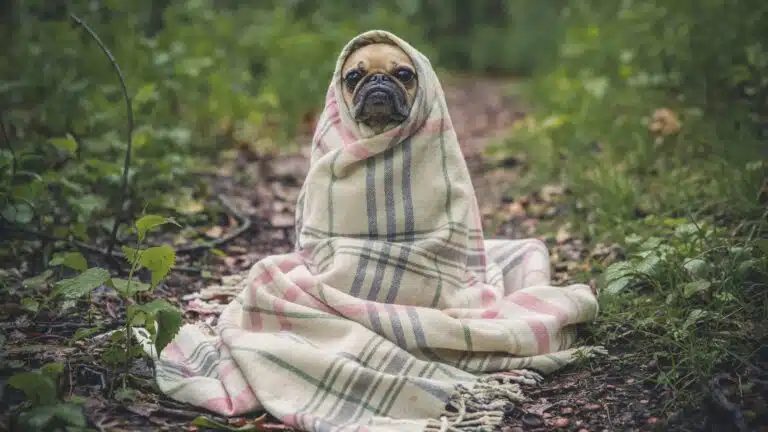
A good Halloween costume for a dog is one that doesn't cover their eyes, ears or nose, lets them walk, breathe and bark normally, has no small parts they could pull off and swallow, and is worn only for a short while and under supervision.
If your dog tries to take it off, freezes or hides, take it off: a bandana or a decorated collar is just as festive and much more comfortable.
October 31 in Colombia is costume day for the whole family, and more and more dogs show up in photos at the apartment complex, school or mall. That's great, as long as the party is fun for them too. This guide helps you choose the costume, get your dog used to it before the big day, read the signs that they're not having a good time and handle what causes the most accidents that night, which isn't the costume: it's the candy bag.
How to choose the costume: checklist
Before you pay, look at the costume with your dog in mind, not the photo on the package. The American Kennel Club and the ASPCA agree on these points:
| Check | What to look for | Why |
|---|---|---|
| Eyes, ears and muzzle | Nothing that blocks their vision, flattens their ears or covers their face | A dog that can't see or hear well gets scared more easily and can trip |
| Movement | They can walk, sit, lie down and go potty without taking it off | A costume that gets in the way causes stress and falls |
| Breathing and barking | Nothing tight around the neck or chest; for short-nosed breeds, even looser | They need to be able to breathe, pant and bark normally |
| Small parts | Buttons, pom-poms, rhinestones, bells or dangling decorations | They can be pulled off with teeth and swallowed: a choking or blockage risk |
| Materials | No glitter, flaking paint or dyes that bleed | They can irritate the skin or cause harm if eaten |
| Size | Measure the neck, chest and back length; two fingers should fit between the fabric and the body | A loose costume gets tangled; a tight one rubs and bothers them |
| Climate | Lightweight fabrics if you live somewhere warm or they'll be outdoors | Clothing holds in heat and makes it harder for dogs to regulate their temperature |
A very Colombian detail: dressing up a dog in Bogotá isn't the same as in Cali, Barranquilla or Santa Fe de Antioquia. If your city is hot, skip plush or hooded costumes and go with something single-layer.
Which type of costume suits your dog
“Less is more” is the rule the AKC keeps repeating. For many dogs, a single themed accessory is a better choice than a full costume.
| Type | Which dog | Watch out for |
|---|---|---|
| Bandana | Almost all, including those who've never worn clothes | Only put it on under supervision: it can get caught on things |
| Decorated collar or bow | Small or long-haired dogs, like the one in the photo | Keep the decoration out of reach of their mouth |
| Cape | Calm dogs who already tolerate a sweater or raincoat | Make sure it doesn't drag or get tangled in their legs |
| Full costume (full body) | Only dogs who already wear clothes and wear them calmly | Heat, size and time: just for the photo |
| Hats, glasses, masks | Practically none | They block sight and hearing, and dogs try to paw them off |
How to get them used to it in a week
The most common mistake is putting the costume on for the first time on the 31st itself, with the house full of people. The AKC recommends introducing it before and rewarding your dog so they associate it with something good. Here's a simple seven-day plan:
- Days 1 and 2 — Let them sniff it. Leave the costume on the floor. Every time they sniff it or come close, a small treat. Don't put it on them yet.
- Days 3 and 4 — Let it touch. Lay it over their back, unfastened, for a few seconds. Treat, then off. Repeat two or three times a day.
- Day 5 — Fastened, one minute. Put the whole thing on, give a treat, let them walk around the house a bit, and take it off before they show any discomfort.
- Days 6 and 7 — Longer, with a little noise. Stretch it to a few minutes, with play or a short walk. If they tense up at any step, go back to the previous one.
For this you want treats that can be broken into very small pieces, because you'll be giving lots of them. The Liver Biscuits 175gr or the Beef Lung 60g break apart easily by hand. If you want to dig deeper into the technique, we explain it in dog training with treats, and how to choose treat size for your dog, in which treat to give your dog based on size.
Remember that treats count toward what they eat each day: if you give more than usual that week, cut back their meals a little.
Signs it's time to take it off
Some dogs enjoy the attention; others clearly don't. Take the costume off right away if you notice any of these signs:
- Tries to get it off again and again, with their mouth or by scratching with their paws.
- Freezes, walks strangely or doesn't want to move.
- Tucks their tail, flattens their ears or crouches.
- Yawns repeatedly, licks their lips or shows the whites of their eyes.
- Pants heavily without having exercised, or tries to hide.
No photo is worth your dog having a bad time. If they won't tolerate the costume, an orange bandana or a decorated collar includes them in the celebration just the same.
The night of the 31st: candy, doorbell and outings
Candy: the most dangerous part of the night
No Halloween candy is for dogs. Chocolate is toxic —dark and baking chocolate are the most dangerous— and sugar-free candy and gum can contain xylitol, which is very serious for dogs. Kids hide their candy bag in their room and the dog's nose finds it. Keep it up high or in a closed drawer.
If you suspect they ate something, call your vet right away, even if they seem fine, and keep the wrapper handy.
We explain why chocolate is so dangerous, and what to do if they already ate it, in can dogs eat chocolate?. The full list of what they should never eat is in foods dogs can't eat.
The doorbell and visitors
With costumed kids, the doorbell and laughter, the night can be very stressful. The ASPCA recommends that all but the most social dogs stay in a quiet, comfortable room away from the door during the busiest hours, with their favorite toys or something to chew to keep them busy.
For that stretch, something long-lasting works well: a Beef Ear Roll, a Beef Trachea 12″ or, for large dogs, a Half Beef Femur. As with any hard chew: the right size for your dog, with someone keeping an eye on them, and taken away once it gets small. If your dog has a hard time being left alone, also check out our guide on separation anxiety.
Candles, decorations and cords
A jack-o'-lantern with a lit candle is easy to knock over with a wagging tail. Use LED lights for any decorations at their height and keep cords out of reach.
If they go trick-or-treating
- On a leash, always: there are more people, noise and strange costumes, and a scared dog can bolt.
- ID tag on their collar, with your cell number.
- Something reflective if it gets dark.
- If they seem tense, the round is over: back home.
So they can celebrate too: treats made for dogs
Instead of candy, keep single-ingredient dehydrated treats on hand, with no preservatives or colorants, made in La Estrella, Antioquia, by an ICA-certified Colombian manufacturer.
- For costume training: Liver Biscuits 175gr, Beef Jerky 100gr
- For doorbell time: Beef Ear Roll, Beef Trachea 12″
My Pet Team
The My Pet content team. My Pet is a Colombian maker of 100% natural dog treats and edible chews, produced in La Estrella, Antioquia, with certification from the Colombian Agricultural Institute (ICA).
This guide is for information only and does not replace a visit to the vet. More about us on About us.
Frequently asked questions
Is it bad to put a costume on my dog?
Not necessarily. A costume is safe if it fits well, doesn't cover their eyes, ears or nose, lets them walk, breathe and bark normally, and has no small pieces they could pull off and swallow. What is a problem is forcing a dog that shows stress to stay in costume. The ASPCA recommends not dressing them up unless you know they enjoy it.
How long can my dog wear a costume?
As little time as possible: as long as the photo or the parade lasts. The American Kennel Club advises leaving elaborate costumes on only long enough for a few photos and never leaving your dog unsupervised while wearing one. In warm weather, even less, because clothing holds in heat.
What do I do if my dog tries to take off the costume?
Take it off. Trying to remove it again and again, freezing, tucking the tail, yawning repeatedly or licking the lips are signs they aren't comfortable. A bandana or a decorated collar is usually an alternative dogs tolerate much better.
Can I give my dog Halloween candy?
No. Chocolate is toxic to dogs, and sugar-free candy can contain xylitol, which is very dangerous for them. Keep the candy bag out of reach and, if you want them to join in, give them a treat made for dogs. If they already ate something, call your vet.
Is it a good idea to take my dog trick-or-treating?
Only if your dog is very social and calm around noise, kids and people in costume. For most dogs it's better to stay home, in a quiet room away from the door. If they do go out, use a leash, a collar with an ID tag and, at night, something reflective.
Summary
- The ideal costume doesn't cover eyes, ears or nose, lets them move and breathe, and has no pieces they could swallow.
- Less is more: a bandana or a decorated collar is usually better than a full costume.
- Get them used to it over a week with small treats, not on the 31st itself.
- Short sessions, under supervision. If they show stress, take it off.
- Candy is the real danger: keep chocolate and xylitol out of reach.
What's your dog dressing up as this year? Tell us in the comments.
References
- American Kennel Club — Halloween Dog Costume Safety Tips Every Owner Should Know — Checking pieces and materials, simple accessories, supervision, temperature and signs it's time to remove the costume.
- ASPCA — Halloween Safety Tips — Toxic candy (chocolate, xylitol), visitors, decorations, costumes and identification.