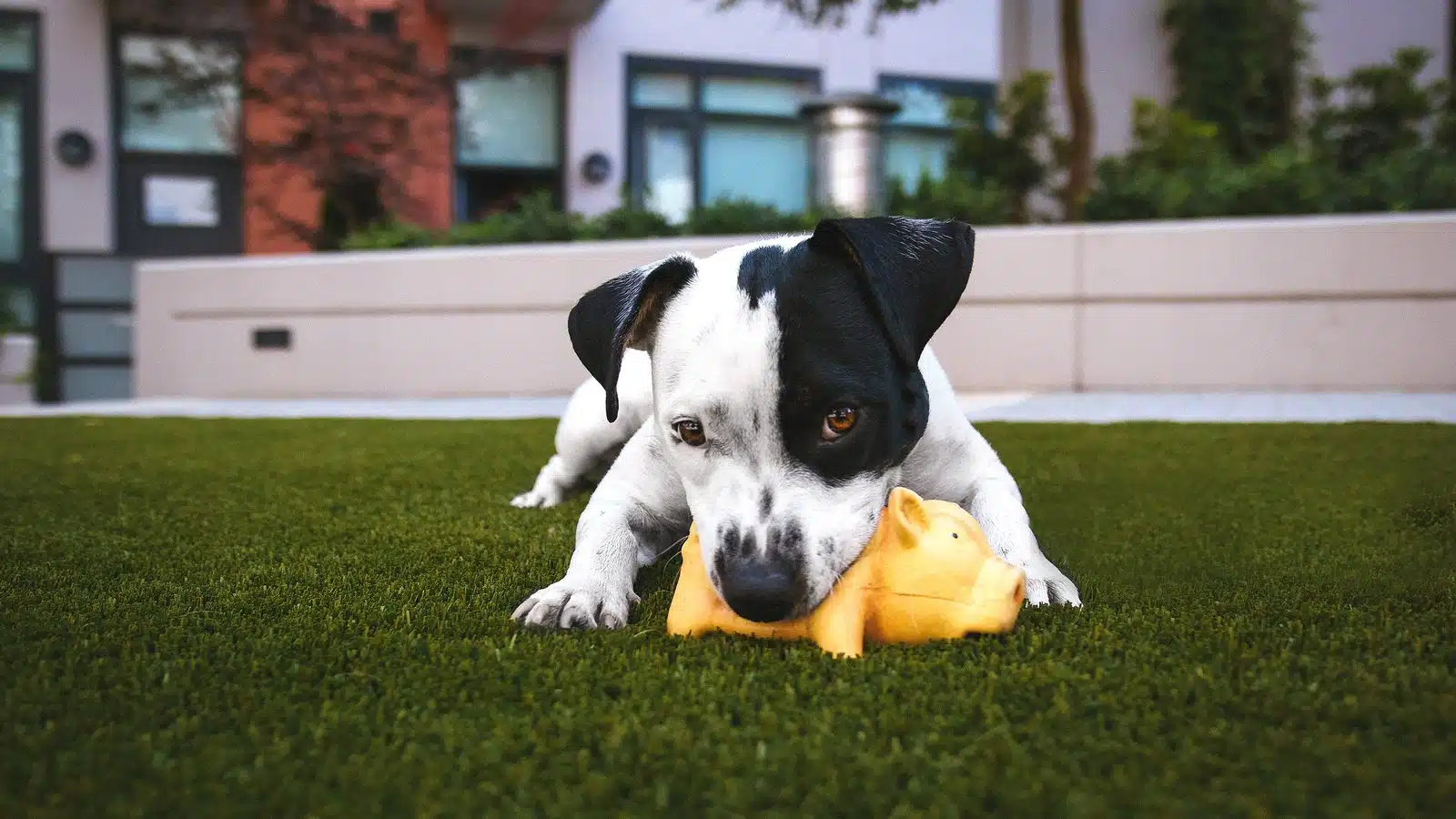
A Kong for dogs —or any rubber stuffable toy— is filled with part of their daily food and small pieces of natural treats, from easiest to hardest to get out. Start with loose pieces that fall out when it moves and, once your dog has mastered that, move on to sealed or frozen fillings.
Three rules: nothing with xylitol, the filling counts toward what they eat in a day and the first few times, under supervision.
A stuffable toy turns a treat your dog eats in three seconds into a long session of sniffing, licking and nudging the toy until the last crumb comes out. The ASPCA recommends it to give dogs something of their own to do at the times of day when they're most tempted to chew what they shouldn't, and to get them using their head as well as their body. In this guide you'll find five recipes ordered by difficulty, how to pick the size, how to clean it and which ingredients should never go inside.
KONG is a registered trademark of another company. My Pet does not sell it and has no relationship with it. We use the name because that's how this type of toy is known; the recipes work for any durable rubber stuffable toy.
How to choose the toy and the size
Size matters more than brand. A toy that's too small can get stuck in the mouth or be swallowed; one that's too big frustrates a small dog. As a practical guide:
| Dog | Toy | Watch out for |
|---|---|---|
| Small (up to 10 kg) | Small size, softer rubber | Very small treat pieces so they don't get frustrated |
| Medium (10 to 25 kg) | Medium size | Make sure the whole toy can't fit behind their teeth |
| Large (over 25 kg) | Large or extra-large size, durable rubber | Power chewers break soft models |
| Puppy | Puppy model, more flexible | Soft fillings; nothing hard while they're teething |
| Senior | Soft rubber, wide opening | Fillings that soften; check their teeth |
If you're torn between two sizes, choose the bigger one. And if the toy cracks or pieces come off, replace it. To choose the size of the treats that go inside, see which treat to give your dog based on size.
5 recipes, from easy to frozen
The idea is for your dog to always win at first. If the filling is packed so tight the first time that they can't get anything out, they'll get bored and give up on the toy. Move up a level only when they empty the previous one with no trouble.
Level 1 — Loose: biscuits that fall out
Put in 3 or 4 Chicken & Carrot Biscuits broken in half, without packing them in. As the toy rolls, the pieces come out on their own. This helps them understand there's food inside.
Level 2 — Mixed with their kibble
Fill the toy with part of their dry kibble ration and mix in 4 or 5 pieces of Beef Lung broken by hand. The ASPCA suggests exactly this: putting part of the dog's daily food in the toy. Lung is light and breaks easily into lentil-sized pieces.
Level 3 — With a plug
Fill it as in level 2 and plug the large opening with a strip of Beef Jerky folded or wedged across it, so your dog has to pull it out to open it. Now there's one more step before the reward.
Level 4 — Smeared
Spread a thin layer of unsalted peanut butter inside — make sure it's xylitol-free, and press into it small pieces of Liver Biscuits. The American Kennel Club mentions exactly this: spreading peanut butter inside hollow toys makes the treat last longer. Use just a little: it's very high in calories.
Level 5 — Frozen
Soak part of their kibble in warm water until it softens, mix it with pieces of lung or biscuit and, if you like, a few pieces of banana. Fill the toy, plug the opening with a whole biscuit and freeze it overnight. You get a filling that takes much longer to empty, ideal for a day when your dog has energy to spare. If you're looking for more safe ingredients, you'll find them in which fruits dogs can eat.
| Level | Filling | Difficulty | For |
|---|---|---|---|
| 1 | Loose biscuits | Very easy | First time, puppies |
| 2 | Kibble + lung | Easy | Everyday use |
| 3 | Same, with a jerky plug | Medium | Dogs who already empty level 2 |
| 4 | Smeared with pieces stuck on | Medium | A longer session |
| 5 | Soaked, frozen kibble | Hard | High-energy dogs |
If you'd rather make your own biscuits to fill it, you'll find recipes in homemade dog biscuits.
What shouldn't go inside
- Xylitol. Some peanut butters and “sugar-free” products use it as a sweetener. In dogs it causes a sudden release of insulin and a rapid drop in blood sugar, according to the FDA. Read the label every time: brands change their formulas.
- Chocolate, grapes, raisins, onion and garlic, even in a “homemade” filling. The full list is in foods dogs can't eat.
- Cooked bones or bone fragments that could get stuck in the toy.
- Pieces so big that your dog has to bite the rubber to get them out.
How much filling: the daily count
A stuffed toy every day is a great habit, but it adds up. Two simple rules:
- The base comes from their own food. Use part of their daily kibble ration as the main filling and subtract it from what you put in their bowl.
- Treats, in moderation. The AKC reminds us of the general rule: treats shouldn't go over 10% of what your dog eats in a day. The treats and peanut butter in the filling count toward that.
If your dog is already overweight, a stuffable toy is a great tool precisely because it makes them eat their portion more slowly. We explain it in my dog is overweight: how many treats to give.
Supervision
The ASPCA advises keeping an eye on your dog whenever they have something edible to chew, in case they choke. The first few times you use the toy, watch: are they getting the food out or trying to tear up the rubber? If they bite it to break it, switch to a tougher model or a bigger size. It also recommends rotating toys every few days so they don't get bored of the same ones.
If what worries you is how your dog behaves when left alone, also check out our guide on separation anxiety, and if you want to use the toy as part of a training plan, dog training with treats.
How to clean it
- After each use, rinse it with warm water to loosen any leftovers.
- Wash it with mild soap and a bottle brush or an old toothbrush to reach the bottom.
- Rinse well, until there's no soap smell left.
- Let it dry upside down before filling it again.
- Inspect it: if it has cracks, loose parts or the rubber feels sticky, replace it.
Having two identical toys helps: one in use and one clean and ready, or one in the freezer.
Natural treats for stuffing
Dehydrated treats and biscuits that break by hand into small pieces. No preservatives or colorants, made in La Estrella, Antioquia, by an ICA-certified Colombian manufacturer.
- Beef Lung 200g — light, for mixing with kibble
- Liver Biscuits 500gr — for sticking to the spread
- Beef Jerky 100gr — strips to plug the opening
- Chicken & Carrot Biscuits 500gr — for level 1
My Pet Team
The My Pet content team. My Pet is a Colombian maker of 100% natural dog treats and edible chews, produced in La Estrella, Antioquia, with certification from the Colombian Agricultural Institute (ICA).
This guide is for information only and does not replace a visit to the vet. More about us on About us.
Frequently asked questions
What can I put in a Kong for dogs?
Part of their daily kibble, soaked or dry, small pieces of natural treats like biscuits, lung or dehydrated meat, and some safe fruits. To plug it or stick things on, a little unsalted, xylitol-free peanut butter. Avoid any ingredient on the list of foods dogs can't eat, like chocolate, grapes, onion or garlic.
Can I use peanut butter to fill it?
Yes, in small amounts and only if it doesn't contain xylitol. Some brands use it as a sweetener, and in dogs it causes a rapid drop in blood sugar. Read the label every time you buy a jar and choose unsalted peanut butter. It's very high in calories: count it as part of their treats for the day.
How many times a day can I give the stuffed toy?
As many as you like, as long as the filling comes out of what they already eat in a day. A good practice is to use part of their kibble ration and save the treats for the plug or the surprise at the bottom. Treats shouldn't go over 10% of what your dog eats in a day.
Can I leave my dog alone with the stuffed toy?
Not the first few times: watch to see how they use it and whether they try to chew the rubber instead of getting the food out. With hard treat fillings or large pieces, it's always better under supervision. If the toy breaks or pieces come off, take it away and replace it.
How do you clean a stuffable toy?
After each use, with warm water and mild soap, using a bottle brush or toothbrush for the inside, and rinsed well. Let it dry upside down before filling it again. If food is left inside for days, mold and bad smells can develop.
Summary
- A Kong for dogs is stuffed in levels: loose, mixed, plugged, smeared and frozen.
- The base is their own food; small pieces of natural treats are the reward.
- Nothing with xylitol and nothing from the list of foods dogs can't eat.
- The right size and supervision the first few times; if it breaks, replace it.
- Clean after each use and dry upside down.
What's your dog's favorite filling? Tell us in the comments.
References
- ASPCA — Destructive Chewing — Food toys to exercise the mind, including part of the daily ration, supervision with edible chews and toy rotation.
- American Kennel Club — Can Dogs Eat Peanut Butter? — Spreading it in hollow toys, the 10% rule and the risk of xylitol.
- FDA — Paws Off Xylitol; It’s Dangerous for Dogs — How xylitol affects insulin and blood sugar in dogs.